The real cost of Доставка офисных расходников: hidden expenses revealed
The Hidden Price Tag Nobody Talks About
Last Tuesday, Marina from accounting walked into my office with a spreadsheet that made my coffee go cold. Our office supplies delivery costs had somehow ballooned by 43% over six months—and the line items for actual pens, paper, and toner hadn't budged an inch.
Turns out, we'd been hemorrhaging money on something most businesses treat as an afterthought: the actual logistics of getting staplers and sticky notes from point A to point B. Office supply delivery seems straightforward enough—you click, you pay, boxes show up. Except there's an entire ecosystem of fees, inefficiencies, and hidden costs lurking beneath that "free shipping" promise.
The Sticker Shock Behind Those Staplers
Here's what nobody tells you when you're setting up your office supply chain: the delivery itself often costs more than the supplies. A 2023 logistics industry report found that businesses waste approximately 23% of their office supply budget on avoidable delivery expenses. That's nearly a quarter of your spending vanishing into thin air.
The average mid-sized company with 50-100 employees orders office supplies 3-4 times monthly. Sounds reasonable. But each delivery triggers a cascade of costs that never appear on the invoice.
The Real Numbers Everyone Ignores
Minimum order thresholds create the first trap. Your vendor promises free delivery on orders over $150, so you add items you don't immediately need. That extra inventory sits in your storage closet (which costs money to maintain), ties up capital that could work elsewhere, and often expires or becomes obsolete before anyone uses it.
Emergency orders hit even harder. Need toner cartridges by tomorrow because someone forgot to check inventory? That rush delivery premium typically runs 35-50% above standard rates. One facilities manager I spoke with tracked these panic purchases over a quarter—they accounted for $4,200 in unnecessary spending for a 75-person office.
Time Is Money (And We're Bleeding Both)
Someone has to receive those deliveries. Sounds trivial until you calculate the actual labor cost.
Reception staff spend an average of 15-20 minutes per delivery: signing for packages, sorting items, notifying departments, and logging inventory. At four deliveries per week, that's 52 hours annually—more than a full work week dedicated solely to accepting boxes of Post-its. At an average administrative salary of $22/hour, you're looking at $1,144 in pure labor costs just for the privilege of opening boxes.
Then there's the distribution nightmare. Those supplies don't magically teleport to desks. Someone walks them around, fields questions about what arrived versus what was ordered, and deals with the inevitable "I didn't get my highlighters" complaints.
The Consolidation Myth
Vendors love selling consolidation as the solution. "Order everything from us!" they chirp. "Streamline your supply chain!"
Except single-vendor relationships create their own problems. You lose price competition. That vendor knows you're locked in, and prices creep upward by 3-5% annually—small enough to avoid scrutiny, large enough to compound into serious money over time.
Multi-vendor strategies seem smarter but multiply those hidden delivery costs. Three vendors mean three separate minimum orders, three delivery windows to manage, three invoices to process. The administrative overhead alone can eclipse any savings from competitive pricing.
Storage Costs Nobody Budgets For
Every box delivered needs somewhere to live. Commercial real estate in urban areas runs $30-50 per square foot annually. That supply closet occupying 120 square feet? It's costing you $3,600-6,000 per year before you factor in climate control, security, and fire suppression systems.
Bulk ordering to hit those free delivery thresholds makes this worse. You're essentially paying rent to store excess inventory that vendors could warehouse far more efficiently at their facilities.
What Smart Companies Actually Do
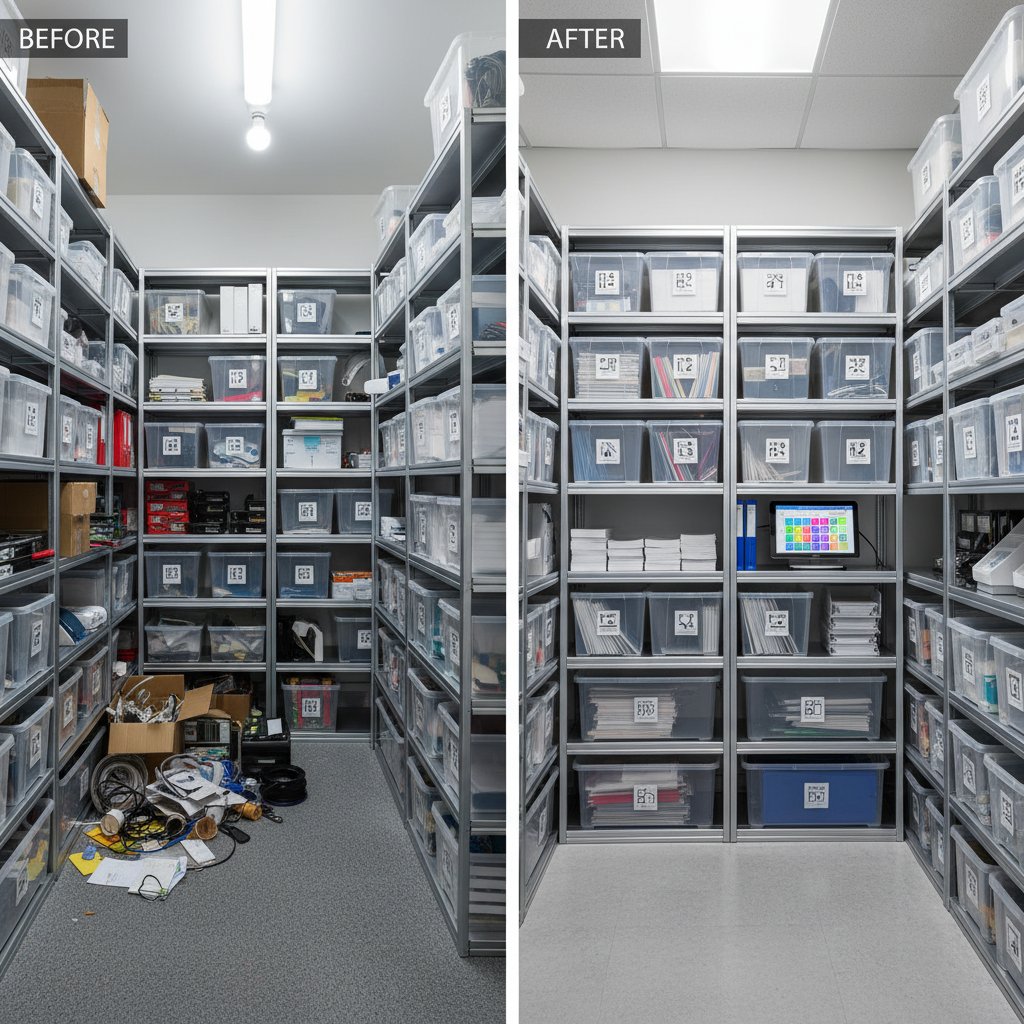
The businesses that crack this code don't obsess over per-unit supply costs. They optimize the entire delivery ecosystem.
Scheduled deliveries eliminate 70-80% of those expensive rush orders. One tech startup I consulted with moved to bi-weekly scheduled deliveries with built-in buffer inventory. Their emergency delivery costs dropped from $850 monthly to less than $100.
Centralized ordering through a single point person prevents duplicate orders and enables better volume planning. When five different people order printer paper independently, you lose bulk discounts and create delivery inefficiencies.
Automated inventory tracking sounds fancy but pays for itself quickly. Simple barcode systems or even well-maintained spreadsheets prevent the "we're completely out" crises that trigger expensive rush orders.
Key Takeaways
- Hidden delivery costs typically add 23% to office supply budgets through rush fees, labor, and storage expenses
- Emergency orders cost 35-50% more than planned deliveries—eliminate 80% of these through scheduled ordering
- Labor for receiving and distributing supplies costs mid-sized offices $1,100+ annually in staff time
- Storage space for excess inventory driven by minimum order requirements costs $3,600-6,000 yearly for typical supply closets
- Single-point ordering with scheduled deliveries reduces total supply chain costs by 15-20% compared to ad-hoc multi-person ordering
The Bottom Line Nobody Wants to Calculate
Add it all together—the rush delivery premiums, the labor costs, the storage expenses, the excess inventory gathering dust—and that "cheap" office supply delivery system might be your third or fourth largest operational expense after salaries, rent, and utilities.
Marina's spreadsheet wasn't showing a problem. It was showing reality. The question isn't whether these hidden costs exist. They're already draining your budget. The question is whether you're going to keep ignoring them or finally do something about it.